Dinosaurs / Coelophysoids
Procompsognathus
Dinosaur Late Triassic
Procompsognathus was a coelophysoid that lived in the Late Triassic, 215 to 211 million years ago.
- Length
- 1 m
- Mass
- 1.1 kg
- Lived
- 215 to 211 million years ago
- Fossil finds
- 1
Size
The size of Procompsognathus
Outline of Coelophysis bauri, standing in as a general coelophysoid shape, scaled so its length matches the estimate. A posed outline makes the comparison approximate.
The largest Procompsognathus on record is estimated at 1 m (3.3 ft) long, shorter than an adult person is tall.
Its body mass is estimated at 1.1 kg (2.5 lb).
Mass: Benson and others, body mass data, CC0, read 2026-11-15. Length: Wikidata (its stated reference: the Natural History Museum, London, Dino Directory), CC0, read 2026-11-15.
Name
Name and family
The genus was named by Fraas in 1913.
Its one listed species is Procompsognathus triassicus.
It is classed as a carnivore, a diet the database records for Theropoda as a whole.
It is one of 15 coelophysoids in the Paleobiology Database.
Family tree
- Dinosauria
- Theropoda
- Neotheropoda
- Coelophysoidea
- Coelophysidae
- Procompsognathus
Fossils
Where Procompsognathus has been found
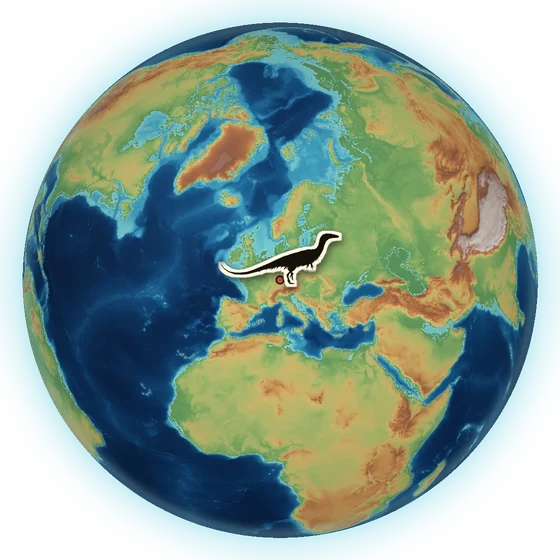
One fossil find of Procompsognathus is recorded, in Germany.
All of the finds with a named rock unit come from the Löwenstein Formation.
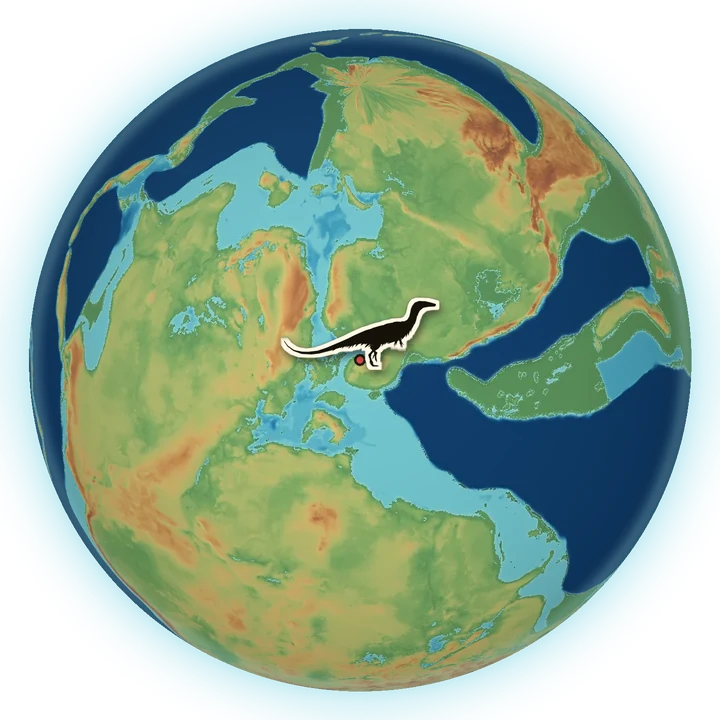
When Procompsognathus lived, these sites lay near 34 degrees north; today they are near 49 degrees north.
On the atlas's maps its finds appear at 220 million years ago.
Neighbours
Its world
Found in the same rocks
 Plateosaurus
 Liliensternus
Sources
Fossil records were read from the Paleobiology Database on 2026-11-16. Procompsognathus in the Paleobiology Database (CC0).
Ancient map: Scotese and Wright 2018, PALEOMAP PaleoDEMs, doi:10.5281/zenodo.5460860, CC BY 4.0, redrawn as shaded relief.
Outline: Coelophysis bauri by Tasman Dixon, PhyloPic, CC0.
The size drawing uses the outline of Coelophysis bauri, standing in as a general coelophysoid shape; no openly licensed outline of Procompsognathus in a pose that can be measured was found.